
This calorie calculator will also display your BMI, BMR, Macros & many other useful statistics!

Use our TDEE Calculator to estimate your daily calorie needs based on your body size, activity level, and goals. Be as accurate as you can when entering your information so the estimate gives you a useful starting point.
Enter your details, select your activity level, and use the result to estimate calories for maintaining, losing, or gaining weight. From there, track your real-world results and adjust as needed.

Your weight loss journey starts with understanding your calories. To base your weight loss calories on some random number is pointless. Instead, start with a number that makes sense:
Your TDEE, or Total Daily Energy Expenditure,
Here’s why it’s crucial.
Your TDEE is the total number of calories you burn each day. This number is the foundation for any effective weight management plan.
For instance:
TDEE calculation uses a simple equation that involves your BMR (Basal Metabolic Rate) and activity level. By considering these factors, a BMR TDEE calculator can provide a useful estimate of your daily calorie needs.
Here are a few other numbers that go into your TDEE calculation:
A TDEE calorie calculator is the easiest way to calculate your TDEE quickly. It helps you design a personalized diet plan that works for you.
Once you have your estimated TDEE, a calorie deficit can be used as a starting point for fat loss. Many people begin with a moderate reduction, then adjust based on their weight trend, activity, adherence, and progress.
Your result gives you a calorie target to use as a starting point. Track your intake and weight trend for 2–3 weeks, then adjust based on your real-world results. You can also calculate your macros to turn that calorie target into daily protein, carbohydrate, and fat goals.
So, if you want to:
Our advanced IIFYM TDEE Calculator estimates how many calories your body burns each day, giving you a starting point for maintenance, fat-loss, or muscle-gain calorie targets.
At the heart of our method is the Mifflin-St Jeor equation.
Why does this matter?
The calculator uses the Mifflin-St Jeor equation to estimate resting energy needs, then factors in your activity level to estimate Total Daily Energy Expenditure. The result is a useful starting estimate, not a direct measurement of your metabolism.
The bottom line is:
Use the estimate as a starting point, then compare it with 2–3 weeks of consistent intake and average body-weight trends. Your real-world results are the best way to fine-tune the number.
So, if you’re thinking, “How many calories do I need, you need to know your TDEE or Total Daily Energy Expenditure. It’s essentially your body’s calorie counter. Think of it as the total fuel your body burns in a day.
But how does it work?
Let’s try to understand:
Putting it all together:
A BMR TDEE calculator will give you an estimate of your daily calorie needs. It answers some crucial questions in your mind: “How many calories should I eat a day?” and “What are my maintenance calories?”
Why does this matter?
Knowing your TDEE helps you calculate how many calories you need to eat per day to maintain, lose, or gain weight. As a result, it helps you do effective diet planning.
In summary:
Understanding your TDEE is essential. It guides you in determining the calories to eat per day to achieve your health and fitness goals.
BMR (Basal Metabolic Rate) is the energy your body uses at complete rest to keep basic functions running, such as breathing, circulation, and organ function.
TDEE (Total Daily Energy Expenditure) starts with your BMR and adds the energy you use through daily movement, structured exercise, and digestion. That is why TDEE is the more useful number when you are setting a calorie target for maintenance, fat loss, or weight gain.
The IIFYM calculator estimates BMR with the Mifflin-St Jeor equation, then applies an activity factor to estimate TDEE. Both numbers are estimates, so use them as a starting point and refine your calorie target with 2–3 weeks of consistent intake and average body-weight trends.
Your Activity Level also plays an important role in determining how much energy your body uses each day.
Here’s how you determine your activity level:
The IIFYM (If It Fits Your Macros) TDEE calculator uses your BMR estimate and reported activity level to estimate your daily calorie needs.
Here’s a quick guide to activity levels in our TDEE calculator:
To know your daily calorie needs, a daily kcal calculator, such as our TDEE calculator is an indispensable tool. It provides you valuable info based on your activity level so that you can manage or lose weight effectively.
For instance, If you want to burn fat, a TDEE calculator to lose weight will help you adjust your daily calorie goals. It can also serve as a free calorie deficit calculator and help you consume less than what you burn.
By entering your activity level in these tools, you can make well-informed decisions about your diet.
Healthy eating can be challenging for some people. There are days when we eat a little too much and others when we might not get enough of the nutritious foods we need.
A study by the CDC in 2013 highlighted a shocking fact:
About 11.3% of the calories Americans consume are from fast food. Experts believe this number should be more like 6%. Knowing the right amount of calories for you can help you overcome unhealthy eating habits.
Think of calories as tiny energy units from our foods. Whether it’s an apple or some almonds, each bite provides calories to power you through the day.
Our bodies need fuel to function. Everything we do, from active sports to the simple act of breathing, burns calories. Different foods offer different calorie counts.
For example, high-fat foods are more calorie-dense than high-protein or high-carb foods. However, too many calories, especially from foods rich in “empty” calories like sweets and alcohol can lead to health problems. Conversely, if you consume too little, you cannot operate at your best.
To maintain optimal health, the perfect calorie balance is key. This is where a TDEE calorie calculator comes into play.
This user-friendly tool helps you understand your Total Daily Energy Expenditure (TDEE). TDEE is the number of calories you need to keep your body running based on your lifestyle.
Whether your goal is weight management or fulfilling your nutritional needs, a calorie intake calculator can simplify the process to a great extent.
If you’re specifically looking to lose weight, our TDEE calculator can serve as an effective weight loss calorie calculator. It can help you create a calorie deficit. For the uninitiated, a calorie deficit is consuming fewer calories than your body uses. It is a proven way to lose weight.
In summary, understanding and managing your calorie intake with tools like a calorie deficit calculator or TDEE calorie calculator can be a game-changer in your fitness and weight loss journey.
Here’s a simple method to calculate the energy or calories in your food. These simple steps will help you manage your diet effortlessly.
Your estimated TDEE is your starting maintenance target. If your average body weight stays roughly stable for 2–3 weeks at that intake, you are close to your real-world maintenance calories.
For fat loss, start with a moderate calorie deficit below your estimated TDEE. Keep intake consistent, track your average weight trend, and adjust only after you have enough data to see whether the trend matches your goal.
For weight gain or muscle gain, start with a modest calorie surplus above your estimated TDEE. Track your body weight and training performance for 2–3 weeks, then adjust based on your rate of gain rather than automatically adding a fixed number of calories.

It’s a common question with a not-so-simple answer.
Because, guess what? Everyone’s needs are different.
Your age, gender, activity level, and health status play a big role in determining how many calories you need.
But here’s a basic rule of thumb.
There is no single minimum calorie target that fits everyone. Your needs depend on factors such as age, body size, activity level, goals, and health context. Use your estimated TDEE as a starting point, then adjust based on your results and, when appropriate, guidance from a qualified healthcare professional.
Now, for the specifics:
To personalize this to your journey, especially if you want to lose weight, a Weight loss calorie calculator is your best friend. It takes the guesswork out of calculating your nutrition needs for effective and quick weight loss.
And there’s more:
If you’re curious about how your activities impact your calorie needs, a calorie burn calculator like our TDEE calculator can help you. It shows how much energy you burn daily. It helps you calculate your calories to lose weight effectively.
So, understanding your Total Daily Energy Expenditure (TDEE) is important regardless of your health and fitness goals.
Calculating your TDEE (Total Daily Energy Expenditure) involves a few steps. Here’s how you can do it:
This number represents the calories you burn while at rest. It’s the baseline number of calories you need to support basic bodily functions.
Your daily activities play a big role. Multiply your BMR by the appropriate factor based on how active you are. Here’s a quick guide:
– Sedentary (1.2)
– Lightly active (1.375)
– Moderately active (1.55)
– Very active (1.725)
– Extra active (1.9)
By multiplying your BMR by your activity level, you’ll find your TDEE.
An easier and more accurate way to find your TDEE is by using an accurate TDEE calculator. IIFYM calculator is a reliable daily calorie intake calculator that can guide your diet planning.
A TDEE or calorie burn calculator can help you adjust your diet and exercise routine for optimal results.
Ready to fine-tune your diet?
Knowing your TDEE is the first step. From there, you can use our Macro Calculator to find the best macronutrient ratio for your goals. This simple strategy can help you calculate your calories to lose weight effectively.
Here’s an example:
Let’s say there’s a guy named John. At 32 years old, standing 5 feet 10 inches tall, and weighing in at 180 pounds, John’s journey offers a fresh perspective on calorie needs. With the help of the Harris-Benedict formula or IIFYM’s BMR Calculator, we’ll find John’s basal metabolic rate (BMR).
John’s BMR = 66 + (6.2 × 180) + (12.7 × 70) – (6.76 × 32).
So, John’s BMR is approximately 1,855 calories per day. But John is more than a number. With a lifestyle that keeps him on his toes, we adjust for his moderate activity level.
To find his Total Daily Energy Expenditure (TDEE), we take his BMR and multiply it by 1.55. This brings us to John’s TDEE of about 2,875 calories per day.
Tailoring to your needs:
While these numbers give John a starting point, you need to personalize your calorie count. A TDEE calculator or an IIFYM calorie calculator steps in here. It uses your reported activity level to estimate daily calorie needs.
The Bottom line:
Understanding your TDEE and macros can help you manage your diet effectively. It helps you align your intake with your body’s actual energy and macronutrient needs.
Here’s a look at calorie requirements across different ages and levels of activity for both men and women.
| Age Group | Gender | Sedentary Lifestyle | Moderately Active Lifestyle | Active Lifestyle |
|---|---|---|---|---|
| 4 – 8 | Male | 1,400 | 1,400 to 1,600 | 1,600 to 2,000 |
| 4 – 8 | Female | 1,200 | 1,400 to 1,600 | 1,400 to 1,800 |
| 9 – 13 | Male | 1,800 | 1,800 to 2,200 | 2,000 to 2,600 |
| 9 – 13 | Female | 1,600 | 1,600 to 2,000 | 1,800 to 2,000 |
| 14 – 18 | Male | 2,200 | 2,400 to 2,800 | 2,800 to 3,200 |
| 14 – 18 | Female | 1,800 | 2,000 | 2,400 |
| 19 – 30 | Male | 2,400 | 2,600 to 2,800 | 3,000 |
| 19 – 30 | Female | 2,000 | 2,000 to 2,200 | 2,400 |
| 31 – 50 | Male | 2,200 | 2,400 to 2,600 | 2,800 to 3,000 |
| 31 – 50 | Female | 1,800 | 2,000 | 2,200 |
| 51+ | Male | 2,000 | 2,200 to 2,400 | 2,400 to 2,800 |
| 51+ | Female | 1,600 | 1,800 | 2,000 to 2,200 |

If you consume more calories than you burn, the risk of weight gain increases.
But there’s another side to the story.
Eating too few calories can lead to being underweight. And you’ll miss out on essential nutrients.
Imagine it like a seesaw. Consuming more calories than you burn will lead to weight gain and eating less will result in weight loss.
Finding the right balance is key.
Here’s how you can achieve it:
A calorie calculator can be a game-changer. It helps you estimate how many calories you may need each day for your goals.
Looking to lose weight?
A calorie deficit calculator is your friend. It shows you how to eat fewer calories than you burn in a sustainable, healthy way.
For serious dieters: The TDEE (Total Daily Energy Expenditure) calorie calculator takes it a step further. It considers your daily activities to estimate a practical starting calorie target based on your daily energy expenditure.
In summary:
Balancing your calorie intake with your calorie burn can help you work toward a healthy weight over time.
| Caloric Balance | Outcome | Implications |
|---|---|---|
| Calories In = Calories Out | Stable Weight | Maintaining this balance helps stay at target weight. |
| Calories In > Calories Out | Weight Gain | Less active individuals often experience weight gain. |
| Calories Out > Calories In | Weight Loss | More active individuals typically see weight decrease. |
When you move around or do activities, you use up energy. And when you use more energy, your body burns calories. This helps you avoid getting too much fat.
Remember, you don’t have to balance the calories you eat every single day. Just try to balance them over weeks and months. Usually, people don’t eat more or less unless they make any changes to their existing diet. If they do change it, they might lose or gain weight.
Here’s an example:
If you eat fewer sweets and carbs for six months and cut down around 300 calories a day, you’ll probably lose weight. But if you start having big chocolate shakes every day (that’s about 400 calories each), you’ll gain some pounds in just two months.
A TDEE calculator gives you an estimate, not a direct measurement of your metabolism. The formula matters, but activity level is usually the biggest source of error because people can burn very different amounts through daily movement and exercise.
The best way to improve accuracy is to use the estimate as a starting point. Track your calorie intake consistently and compare it with your average body-weight trend for 2–3 weeks. If your weight is changing faster or slower than expected, adjust your intake and use your real-world data to fine-tune your maintenance calories.
A good TDEE calculator should be transparent about what it is doing and what it cannot know. It should use a validated metabolic equation, explain how activity level affects the estimate, and avoid presenting the result as an exact measurement of your metabolism.
The most useful calculator also tells you what to do with the number. Your result should be treated as a starting estimate for maintenance, fat loss, or weight gain, then checked against your real-world results. If your average weight trend does not match your goal after 2–3 consistent weeks, make a small adjustment and reassess.
That combination of a sound equation, realistic activity assumptions, clear limitations, and real-world calibration is more useful than a calculator that simply gives you a number and calls it exact.
Once you have your TDEE estimate, choose one goal: maintain, lose fat, or gain weight. Set your calorie target around that goal and keep it consistent long enough to evaluate the trend.
Use weekly average body weight instead of reacting to a single weigh-in. If your trend is off after 2–3 consistent weeks, make a small adjustment and reassess. You can then use the IIFYM Macro Calculator to turn that calorie target into daily protein, carbohydrate, and fat goals.
This user-friendly tool is your ultimate option for understanding and calculating your daily energy needs.
Here’s how the IIFYM TDEE calculator estimates daily energy needs:
Things you need to enter?
And what will you get out of it?
Here’s how our TDEE calculator uses the above information and turns it into useful results:
– Calories Intake: This will help you know your daily and weekly calorie intake for maintaining your weight and reaching your fitness goals. This is the most important feature of this weight loss calorie calculator.
– Your resting energy estimate and daily energy expenditure: The results show an estimated BMR alongside TDEE components.
– Calories For Weight Loss & Gain: Whether you’re looking to gain weight or lose weight, get detailed calorie intake recommendations. If you’re focused on muscle gain, a weight gain calculator will help you know your precise caloric needs.
– Macronutrient Ratios: You’ll be able to manage your weight with daily macro (proteins, carbs, fats) ratios. This feature is perfect for those following an IIFYM (If It Fits Your Macros) approach. So, you can easily customize your diet, even with a zig-zag diet routine.
– Obesity Class: Find out where your weight falls in the obesity range.
This tool is not just a TDEE calculator for IIFYM enthusiasts; it’s a comprehensive guide for anyone looking to fine-tune their diet and exercise routine.
Understanding your Total Daily Energy Expenditure (TDEE) is a game changer when it comes to managing your health and fitness. With this knowledge, you’re well on your way to understanding your dietary needs.
And remember, the IIFYM (If It Fits Your Macros) isn’t just about counting calories—it’s about making every calorie count in a way that suits your lifestyle and preferences. This revolutionary diet lets you enjoy the foods you love while achieving your weight loss goals. If you’re looking for a structured approach to weight loss, our weight loss programs are designed to provide just that.
At IIFYM.com, we’re not just about numbers. We help you find joy in healthy living.
Our Macro Blueprint provides personalized macro targets tailored to your goals, body, and activity level. With us, dieting becomes a delightful journey, not a chore.
Curious about crafting a diet that feels like it’s made just for you?
Our suite of free calculators, from TDEE to macros, is your first step. And for those days when you need a little culinary inspiration, our delicious, macro-friendly recipes are all you need. At IIFYM, we’ll provide you with the tools to create a flexible diet plan that’s as unique as you are.
Our 16-week Deadline Diet coaching program provides structured macro guidance and accountability. Individual results vary; review the program terms before enrolling.
Start your journey to a happier, healthier you today. Feel free to use our calculators, enjoy our recipes, and the flexibility and freedom of IIFYM. Because here, we believe in eating well, living well, and enjoying every step of the journey. Let’s make something great together.
Finding your Total Daily Energy Expenditure or TDEE helps you know how much energy your body needs each day. Firstly, you find your BMR (Basal Metabolic Rate), which is your body’s base energy requirement for just relaxing. You can do this using formulas such as Mifflin-St Jeor or Harris-Benedict Equations.
Once you’ve got your BMR, add in your activity level. This depends on how much you move around. Are you super active, hitting the gym hard multiple times a day, or maybe even training for a marathon? If so, you’ll multiply your Basal Metabolic Rate by 1.9. But if you’re less active, you’ll use a lower number.
In simpler terms:
TDEE = BMR X activity level. This will give you how much energy you use in a day.
Your Basal Metabolic Rate or BMR is essentially the number of calories your body uses just to stay alive and function properly. It’s the energy that keeps your body ticking even when you’re not doing anything.
Now, your TDEE is a bit more than that. It refers to Total Daily Energy Expenditure. Your TDEE includes your BMR plus all the calories you burn through your daily activities and exercise. So, TDEE is the total number of calories you need in a day.
Here’s the thing:
If you want to change your body composition, like losing weight or building muscle, you usually focus on your TDEE. This means that if you want to lose weight, you’ll need to eat a bit less than your TDEE—usually around 15-20% less.
So, BMR is your body’s basic energy requirements, while TDEE is the bigger picture that includes your body’s basic needs plus everything else you do in a day.
The best TDEE calculator is one that uses a validated metabolic equation, accounts for your activity level, and gives you a realistic starting estimate rather than pretending to measure your exact calorie burn.
The IIFYM TDEE Calculator uses established formulas such as Mifflin-St Jeor along with your activity data to estimate your daily calorie needs. Like every TDEE calculator, the result is an estimate. The best way to improve accuracy is to follow your calculated intake for 2-3 weeks, track your weight trend, and adjust based on your real-world results.
TDEE is short for total daily energy expenditure. Finding your TDEE isn’t easy because it changes from day to day. But we can estimate it by looking at things like your BMR, how active you are (activity levels), and even how your body burns calories while digesting food.
Calculating TDEE starts with estimating your BMR. These formulas take into account things like your age, gender, height, and weight. So, knowing your TDEE helps you understand your calorie requirements or energy needs for each day to maintain your current weight or reach your health goals.
No TDEE calculator can measure your exact daily calorie burn from a few inputs. A useful calculator uses a validated equation such as Mifflin-St Jeor, applies an appropriate activity factor, and clearly treats the result as an estimate.
The IIFYM TDEE Calculator uses that approach. Use the result as a starting point, then compare it with 2–3 weeks of consistent intake and average body-weight trends. Your real-world response is the best way to fine-tune your maintenance calories.
Many people believe that when you exercise regularly, it increases the number of calories you burn overall. These include calories burned both during your workout and throughout the rest of your day.
The good news is that yes, your TDEE takes into account your exercise habits and activity levels. Your “Total Daily Energy Expenditure” is an estimate of all the calories your body uses up in a day, whether you’re active or just resting.
Here’s a simpler way to understand how to calculate your Total Daily Energy Expenditure (TDEE) to help you lose weight:
To find your TDEE, which tells you how many calories you burn in a day, follow these two steps:
And that’s it! Knowing your TDEE helps you understand how many calories you need to eat to maintain your current weight. If you want to lose weight, you’d eat fewer calories than your TDEE.
Yes, if you eat fewer calories than your body uses in a day (that’s your TDEE), you’re likely to shed some weight. A common rule is to cut around 500 calories from your TDEE each day. This puts your body in a calorie deficit mode where it starts burning up stored fat for energy.
Here’s the math behind it:
A 500-calorie daily deficit is often used as a rough starting point, but real weight loss does not follow a fixed 3,500-calories-per-pound rule. Water balance, metabolic adaptation, activity, adherence, and body composition can all affect the rate of change.
TDEE is made up of four key components
1. Resting Metabolic Rate (RMR):
This is how much energy your body uses while you’re sleeping. Even when you’re not doing anything, your body is still working to keep you going.
2. Non-Exercise Activity Thermogenesis (NEAT):
This is the energy your body uses when you’re awake but not doing anything particularly active. It’s the energy you need just to be alert and aware during the day.
3. Thermic Effect of Food (TEF):
When you eat, your body uses energy to digest and process the food. This is called the thermic effect of food. Different foods require different amounts of energy to digest.
4. Energy Needed to Perform Physical Activities:
This is the energy your body uses when you’re up and moving around. Whether you’re going for a walk, hitting the gym, or just doing chores around the house, all of these activities burn energy and contribute to your TDEE.
So, TDEE isn’t just about how much you move; it’s also about how your body functions when you’re resting and digesting food. It takes into account many different factors to determine how much energy your body needs each day.
You don’t always need to work out at the gym to boost your calorie burn. There are plenty of everyday activities that can help you use more calories throughout the day, even without a structured exercise routine.
Here are some simple ways to give your calorie-burning a little extra boost
With these simple changes in your daily routine, you can boost your calorie burn without even realizing it.
First, estimate your TDEE. Then start with a modest calorie surplus rather than automatically adding 500 calories. Track your body weight and training performance for 2–3 weeks, then adjust your intake based on your rate of gain and your goal.
Think of BMR as your body’s basic energy needs just to stay alive. It’s like the energy your body uses to keep the lights on and function properly every day.
But if you want to lose weight, you shouldn’t focus solely on your BMR. Your Total Daily Energy Expenditure (TDEE) includes your BMR plus any extra calories burned through activity.
To shed pounds, aim to eat slightly fewer calories than your TDEE – about 15-20% less should do the trick. This helps your body dip into its stored energy (fat) to make up the difference, leading to weight loss.
Your TDEE is like the number of calories your body needs every day to stay the same weight. If you want to lose weight, you usually try eating a bit less than your TDEE, like 10-20% less. This helps you lose weight slowly and steadily, maybe around 1 or 2 pounds a week.
Your BMR is the calories your body needs just to stay alive and do basic things. To lose weight, you aim to eat about 15-20% less than your TDEE. You can do this by moving more and eating a little less.
Your estimated TDEE gives you a starting calorie level for maintenance. Your actual needs and weight trend can vary, so review your intake and results before adjusting. If you eat more calories than your TDEE, you’ll put on weight. If you eat fewer calories than your TDEE, you’ll lose weight. To find your TDEE accurately, you need to measure your energy expenditure over a day or a few days.
Martins C, et al. (2022). Metabolic adaptation delays time to reach weight loss goals.
https://onlinelibrary.wiley.com/doi/10.1002/oby.23333
Mifflin MD, et al. (1990). A new predictive equation for resting energy expenditure in healthy individuals.
https://pubmed.ncbi.nlm.nih.gov/2305711/
Physical activity and controlling weight. (n.d.) https://www.k-state.edu/paccats/Contents/PA/PDF/Physical%20Activity%20and%20Controlling%20Weight.pdf
Simpson C, et al. (2017). Calorie counting and fitness tracking technology: Associations with eating disorder symptomatology.
https://pubmed.ncbi.nlm.nih.gov/28214452/
Zampino M, et al. (2020). Greater skeletal muscle oxidative capacity is associated with higher resting metabolic rate: Results from the Baltimore Longitudinal Study of Aging.
https://www.ncbi.nlm.nih.gov/pmc/articles/PMC7751004/
Osilla EV, et al. (2022). Calories.
https://www.ncbi.nlm.nih.gov/books/NBK499909/
Paoli A, et al. (2019). The influence of meal frequency and timing on health in humans: The Pawlik K, et al. (2023). BMR calculator (basal metabolic rate, Mifflin St Jeor equation).
https://www.omnicalculator.com/health/bmr
Traditional American cuisine: 1,600 Calories. (n.d.).
https://www.nhlbi.nih.gov/health/educational/lose_wt/eat/menus_tac_1600.htm
Cancello R, et al. (2018). Analysis of predictive equations for estimating resting energy expenditure in a large cohort of morbidly obese patients.
https://www.ncbi.nlm.nih.gov/pmc/articles/PMC6068274/
McMurray R, et al. (2014). Examining variations of resting metabolic rate of adults: A public health perspective.
https://www.ncbi.nlm.nih.gov/pmc/articles/PMC4535334/
Osilla E, et al. (2022). Calories.
https://www.ncbi.nlm.nih.gov/books/NBK499909/
Romano K, et al. (2018). Helpful or harmful? The comparative value of self-weighing and calorie counting versus intuitive eating on the eating disorder symptomology of college students.
https://pubmed.ncbi.nlm.nih.gov/30155857/
Thom G, et al. (2020). Validity of predictive equations to estimate RMR in females with varying BMI.
https://www.ncbi.nlm.nih.gov/pmc/articles/PMC7299486/
Melanson EL. The effect of exercise on non-exercise physical activity and sedentary behavior in adults. Obes Rev. 2017;18(Suppl 1):40–49.
Role of fasting.
https://www.ncbi.nlm.nih.gov/pmc/articles/PMC6520689/
Thomas, DM, et al. (2013). Can a weight loss of one pound a week be achieved with a 3,500 kcal deficit? Commentary on a commonly accepted rule.
https://www.ncbi.nlm.nih.gov/pmc/articles/PMC4024447/
Zheng Y, et al. (2014). Self-weighing in weight management: A systematic literature review.
https://onlinelibrary.wiley.com/doi/full/10.1002/oby.20946
Your TDEE gives you a starting calorie target. If you want help turning that number into personalized macros, adjustments, and a plan built around your goals, our coaching team can help.


32 y/o
IIFYM has been a game-changer for me! I've lost 20 lbs while enjoying my favorite treats. Thanks to this flexible approach, I've found a sustainable way to maintain my progress.

41 y/o
IIFYM transformed my diet. I've lost 15 pounds and feel amazing! It's the most personalized program I've ever tried.
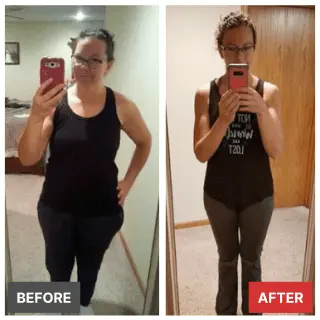
29 y/o
IIFYM made me realize that healthy eating doesn't have to be boring. It's been a delicious journey, and I've never felt better! 🥦🍔🍰