Hungry at Night While Tracking Macros? How to Plan Your Meals
By Anthony Collova, founder of IIFYM.com
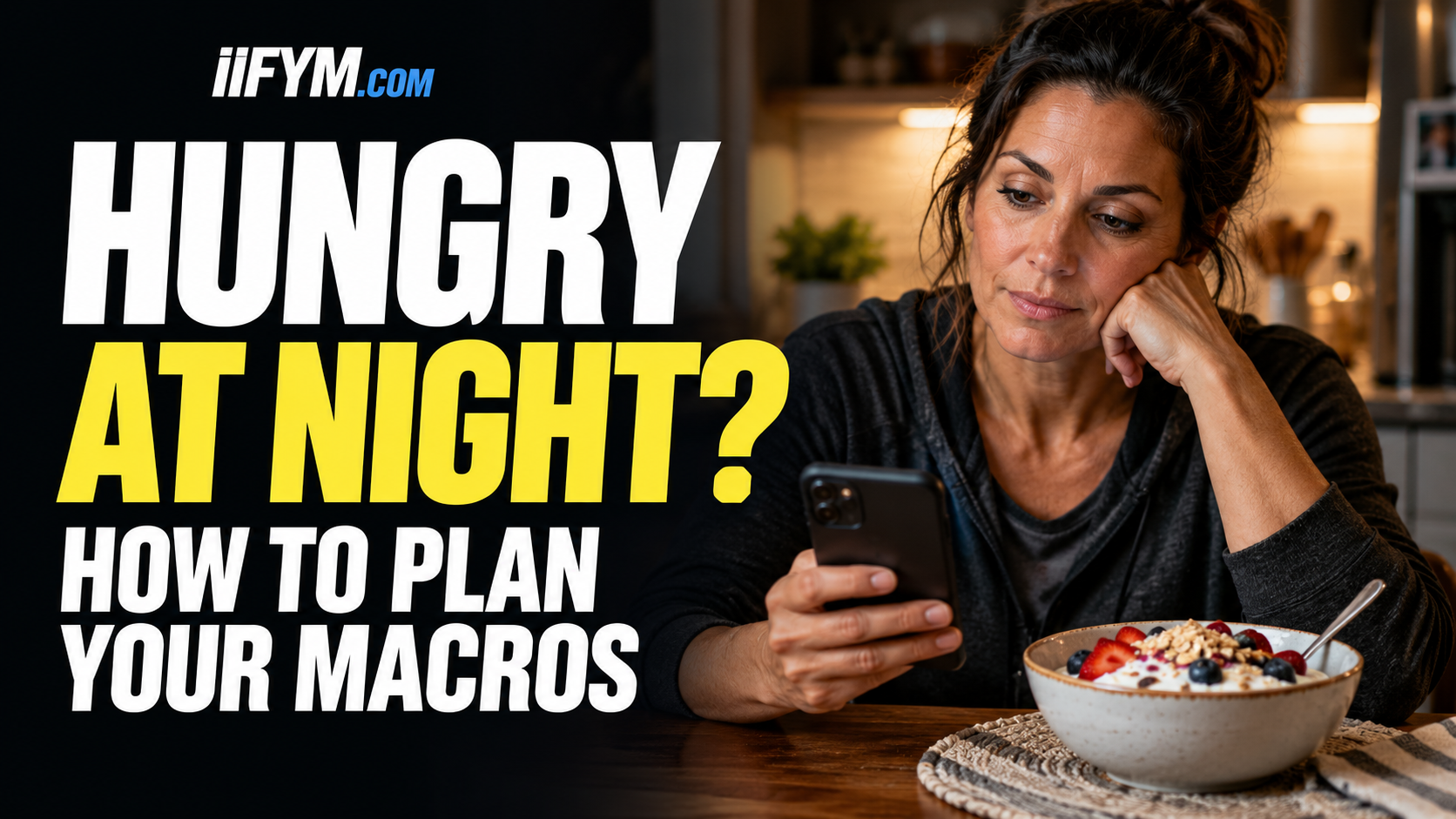
You’ve finished dinner, logged your food, and hit your macros. An hour later, you’re standing in the kitchen wondering what else you can eat.
If that keeps happening, your food log deserves a closer look. Hitting your numbers tells you how much you’ve recorded. It doesn’t tell you whether those targets fit your needs, whether your meals leave you satisfied, or whether your schedule works for you.
If you’re hungry at night while tracking macros, review both your daily intake and how you spread it across meals. You might benefit from a more satisfying lunch, a different dinner portion, or a planned evening snack. If hunger persists throughout the day, moving the same food around may not be enough.
Why You Can Hit Your Macros and Still Feel Hungry at Night
Your total intake may need a closer look
A macro calculator gives you an estimate, not a measurement of everything your body needs. That estimate should be assessed against your progress, energy, hunger and ability to follow the plan.
Some hunger can happen during a calorie deficit. Persistent hunger that makes your day difficult deserves attention. It doesn’t prove that your metabolism’s broken, and it doesn’t mean you need more discipline.
Your meals may leave long gaps or feel unsatisfying
Look beyond the totals at the bottom of your tracking app. Did you have a small lunch and then wait until late evening to eat again? Were your meals enjoyable? Did they include a mix of foods, or did you spend the day grabbing whatever fit the numbers?
Two days can add up to the same macros while feeling different to live through. Your portions, food choices and time between meals all deserve a place in the conversation.
Sleep and your daily appetite pattern can play a role
Evening hunger isn’t always evidence of a planning mistake. A controlled study found that the body’s internal clock contributed to higher hunger in the biological evening. That finding helps explain a pattern; it doesn’t establish the cause of any one person’s hunger. [1]
Sleep can also influence eating. In a randomized trial involving adults with overweight who usually slept less than 6.5 hours, a sleep-extension intervention reduced average energy intake. That doesn’t promise a particular result for you, but it’s a reason to consider sleep alongside your food log. [2]
How to Plan Your Macros Around Dinner and an Evening Snack
Review when hunger shows up
Look at a few typical days before changing your targets. Note when you ate, roughly what you ate, when hunger appeared and when you went to bed. You don’t need another complicated tracking system. A few notes beside your food log can help you see the pattern.
Being hungry at 10pm after a 5pm dinner is a different situation from feeling hungry all afternoon and evening. The first may call for a change in meal timing or an evening snack. The second calls for a broader review.
Plan dinner without shortchanging the rest of your day
If dinner’s the meal you share with your family, start there. Choose a meal you want to eat, estimate the portions, and then build breakfast, lunch and snacks around it.
That gives you a plan before hunger and convenience start making decisions for you. It also shows you whether the day fits together. If reserving dinner means trying to get through work on coffee and a tiny lunch, reconsider the allocation.
You can leave room for a meal you enjoy while still eating enough earlier to function and feel reasonably comfortable. A plan that requires you to arrive at dinner desperate for food needs work.
Build meals that offer more than the right numbers
Include protein-containing foods and sources of fiber across your meals, using foods you enjoy and tolerate. Think about the amount of food on the plate as well as its calories. These are practical considerations dietitians include in advice about managing evening eating. [3]
For example, a lunch could include chicken, tofu or beans, along with rice or potatoes and vegetables. The portions depend on your targets. You don’t need a particular “diet meal,” and a plate of vegetables alone may not meet your needs.
Food enjoyment belongs here too. A meal can match your macros and still leave you wanting something satisfying. Flexible dieting should make space for foods you like.
Include an evening snack when it helps
If you often want food between dinner and bedtime, consider planning for it. You don’t have to improvise after every other meal has used up your targets.
A snack’s an option, rather than a requirement. If you’re comfortable after dinner, there’s no reason to create another eating occasion just because an example includes one. If a large late meal leaves you uncomfortable, try a smaller portion or an earlier time.
Two Ways to Spread the Same Macros Across Your Day
Here’s what changing meal distribution can look like. Both examples total 150 grams of protein, 215 grams of carbs and 60 grams of fat, equivalent to 2,000 calories using four calories per gram of protein and carbohydrate and nine per gram of fat.
These are hypothetical planning examples, not recommended targets for every reader. They demonstrate the arithmetic, not a tested treatment for evening hunger.
Example 1: A more even meal distribution
| Meal | Protein | Carbs | Fat | Calories |
|---|---|---|---|---|
| Breakfast | 35 g | 60 g | 15 g | 515 |
| Lunch | 40 g | 75 g | 20 g | 640 |
| Dinner | 45 g | 55 g | 20 g | 580 |
| Snack | 30 g | 25 g | 5 g | 265 |
| Daily total | 150 g | 215 g | 60 g | 2,000 |
This arrangement leaves more food earlier in the day. The snack can sit where it’s useful, such as between lunch and a late dinner. It doesn’t need to happen at night.
Example 2: More room for dinner and an evening snack
| Meal | Protein | Carbs | Fat | Calories |
|---|---|---|---|---|
| Breakfast | 35 g | 45 g | 15 g | 455 |
| Lunch | 40 g | 60 g | 15 g | 535 |
| Dinner | 45 g | 70 g | 20 g | 640 |
| Evening snack | 30 g | 40 g | 10 g | 370 |
| Daily total | 150 g | 215 g | 60 g | 2,000 |
The second example moves 165 calories from earlier meals into dinner and the evening snack. It leaves breakfast and lunch intact. If that shift makes you uncomfortable during the day, it isn’t a useful trade.
Neither distribution guarantees better results. Research on morning-loaded and evening-loaded diets has found differences in hunger even when weight loss was similar. More evening food isn’t automatically the better choice. [4]
How to Choose an Evening Snack That Fits Your Plan
Start with what you’d enjoy eating, then choose a portion that works within your plan. You don’t need a food marketed for weight loss.
- Greek yogurt with fruit and oats.
- Toast with an egg or cottage cheese.
- Hummus with pita and vegetables.
- A smaller portion of the dinner you enjoyed.
These combinations aren’t nutritionally interchangeable. Check the products and portions you use instead of assuming each example has the same macros. You can change the ingredients to fit your preferences, allergies and tolerance.
A planned snack can also include something sweet. If you enjoy dessert, plan it into your day. The goal’s to make your eating pattern workable, not to turn every evening into another test of whether you can resist food.
What If You’ve Hit Your Macros and You’re Still Hungry?
Your tracking app can add up your food, but it can’t decide whether you should ignore hunger. Consider how strong the hunger feels, when you last ate and whether this keeps happening.
If you’re hungry and need something to eat, have a meal or snack that feels appropriate. Going beyond an estimated target on one day doesn’t mean you’ve failed. Avoid turning it into a reason to skip meals or punish yourself the next day.
Then look at the pattern. If you feel comfortable until several hours after dinner, moving food or planning a snack may help. If you’re hungry through much of the day, review the total intake rather than continuing to shuffle an inadequate amount of food between meals.
You don’t need to change your targets every time your appetite changes. You do need a plan that can be assessed and adjusted when the same difficulty keeps returning. If you’re unsure what to change, bring your food log and hunger notes to a qualified professional.
When Meal Planning Isn’t Enough
Persistent or unusual hunger deserves individual attention, especially when it comes with other symptoms. If eating feels out of control, tracking creates distress, or you’re caught in a cycle of restriction and overeating, seek support from a qualified healthcare professional or registered dietitian.
If you have diabetes, take medication that affects blood sugar, or have a prescribed nutrition plan, follow your clinician’s guidance about meals and snacks. A general macro article can’t replace that care.
Frequently Asked Questions
Should I save calories for dinner?
You can allocate more food to dinner if that suits you. The useful distinction is whether the rest of your day still meets your needs. Skipping meals despite hunger to reserve a large evening allowance may make the plan harder to follow.
Do I need the same macros at every meal?
You don’t need identical amounts of protein, carbs and fat every time you eat. Use your daily targets as a starting structure, then distribute food around your schedule and appetite. Specific medical or performance needs may call for more individual guidance.
Can I eat carbs before bed?
Evening carbs can fit a fat-loss plan. There isn’t a universal hour when they become off-limits, although timing can affect appetite and other responses. For the fuller explanation, read Do Carbs at Night Make You Fat?
Should I change my macros if I’m hungry every night?
Review your intake, meal composition, time between meals and sleep first. If the pattern persists, get your targets reassessed. Adding more rules or trying to tolerate increasingly difficult hunger isn’t a useful substitute for checking the plan.
Get Help Making Your Macros Work for Your Schedule
If you need starting numbers, use the IIFYM macro calculator. If you’ve already got your numbers but keep struggling to make them work, explore IIFYM macro coaching. We can work on the food, structure and adjustments that fit your life.
References
- Scheer FAJL, Morris CJ, Shea SA. The internal circadian clock increases hunger and appetite in the evening independent of food intake and other behaviors. Obesity. 2013. Read the study.
- Tasali E, Wroblewski K, Kahn E, Kilkus J, Schoeller DA. Effect of Sleep Extension on Objectively Assessed Energy Intake Among Adults With Overweight in Real-life Settings: A Randomized Clinical Trial. JAMA Internal Medicine. 2022. Read the study.
- Weinandy L. Late-Night Eating: Tips to Stay Healthy. Ohio State Health & Discovery. Read the dietitian’s guidance.
- Ruddick-Collins LC, Morgan PJ, Fyfe CL, et al. Timing of daily calorie loading affects appetite and hunger responses without changes in energy metabolism in healthy subjects with obesity. Cell Metabolism. 2022. Read the study.